Chicko is a café chain and a community for fans of Korean culture. It's a gathering place for K-pop lovers and anyone drawn to the Asian atmosphere.
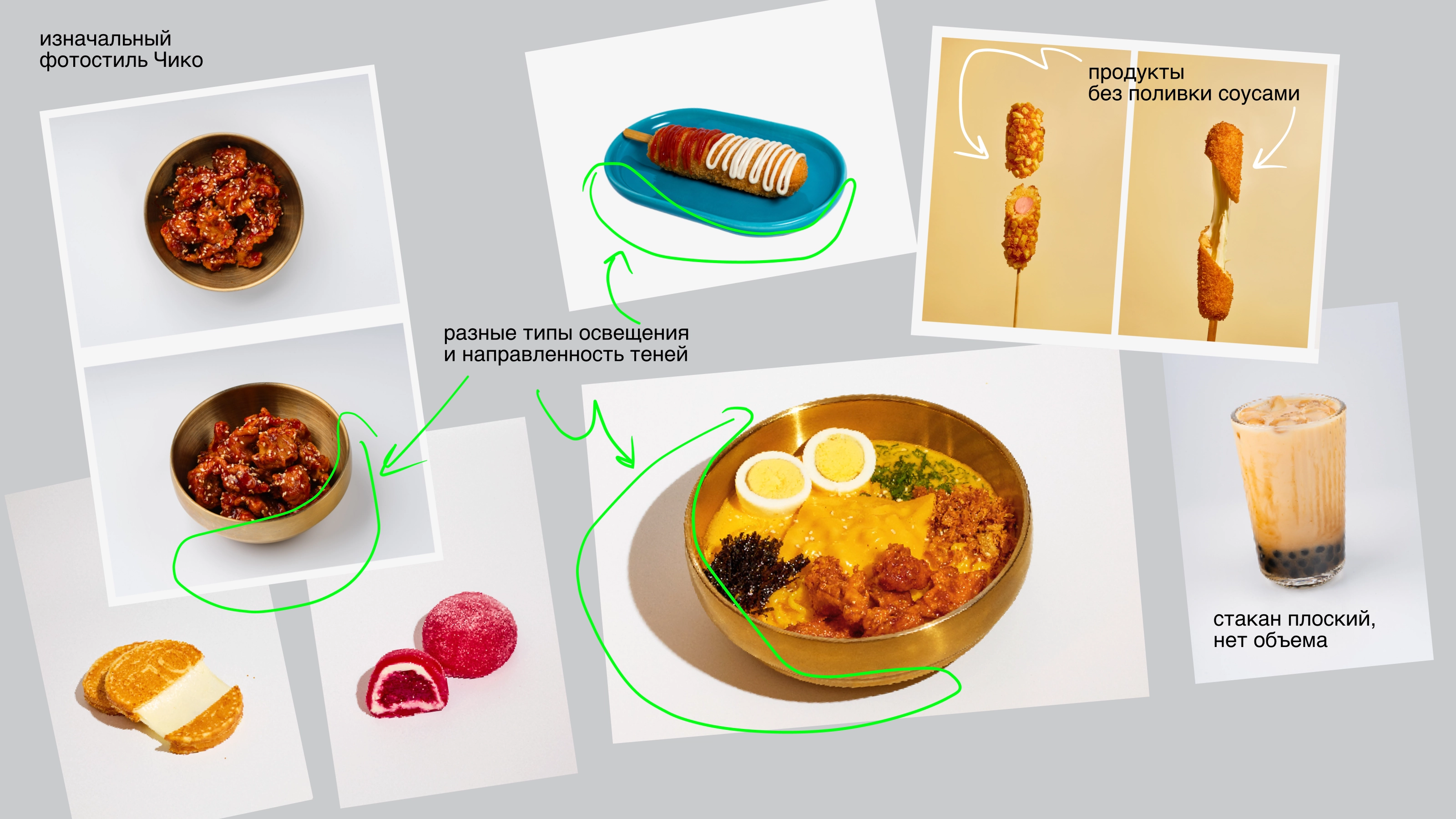
Chicko already had product photos, but they were shot at different times, with different lighting and angles. On the menu, this turned into visual inconsistency: the shots didn't form a unified system and didn't support the brand's cohesion.
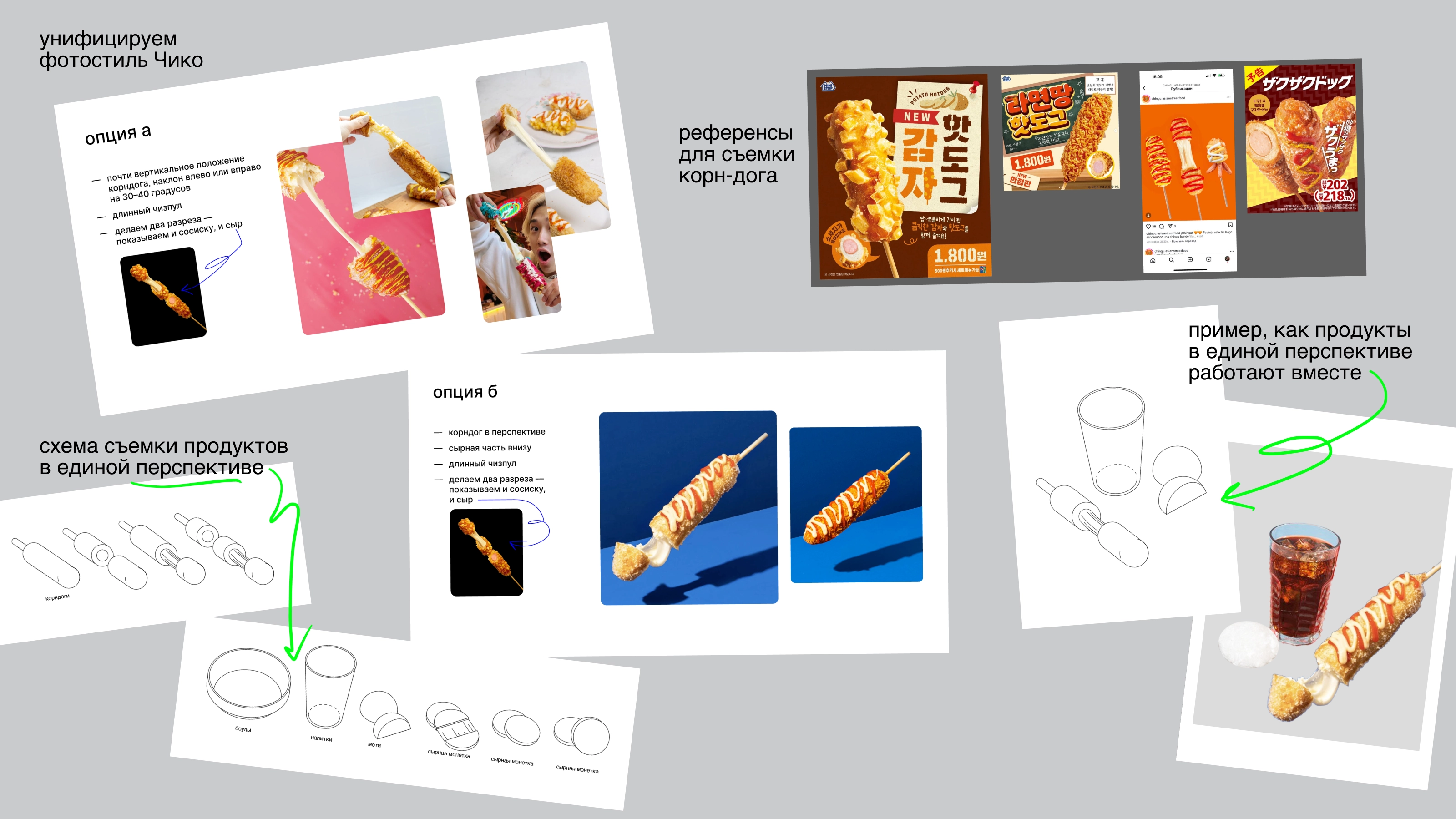
Our task was to bring the visuals to a single style: fix the angles and plating logic so the dishes would read as one consistent line. And at the same time keep the brand's character: street aesthetics, brightness, and appetite appeal.
Along the way, another sub-task emerged: the client wanted to build combos out of these photos, the way large chains do. That meant the shoot had to be planned in advance like a construction kit: a single perspective, a clear scale, and the ability to combine items so everything looked natural rather than pieced together.
Finding solutions
Food photography is always about attention to detail and quick reactions. A dish only stays camera-ready for a few minutes, a drink even less, and the perfect cheese pull or crosswise drizzle takes dozens of takes and a lot of patience.
The shoot took place far from studio conditions: space was tight, dishes arrived unpredictably, and the lighting had to be adjusted on the fly to match the kitchen's rhythm.
Execution
We bet on natural light and genuine textures. Chicko is about street culture and K-pop, so the photos needed to be bright and vivid, with the food looking appetizing without a glossy, overly polished finish.
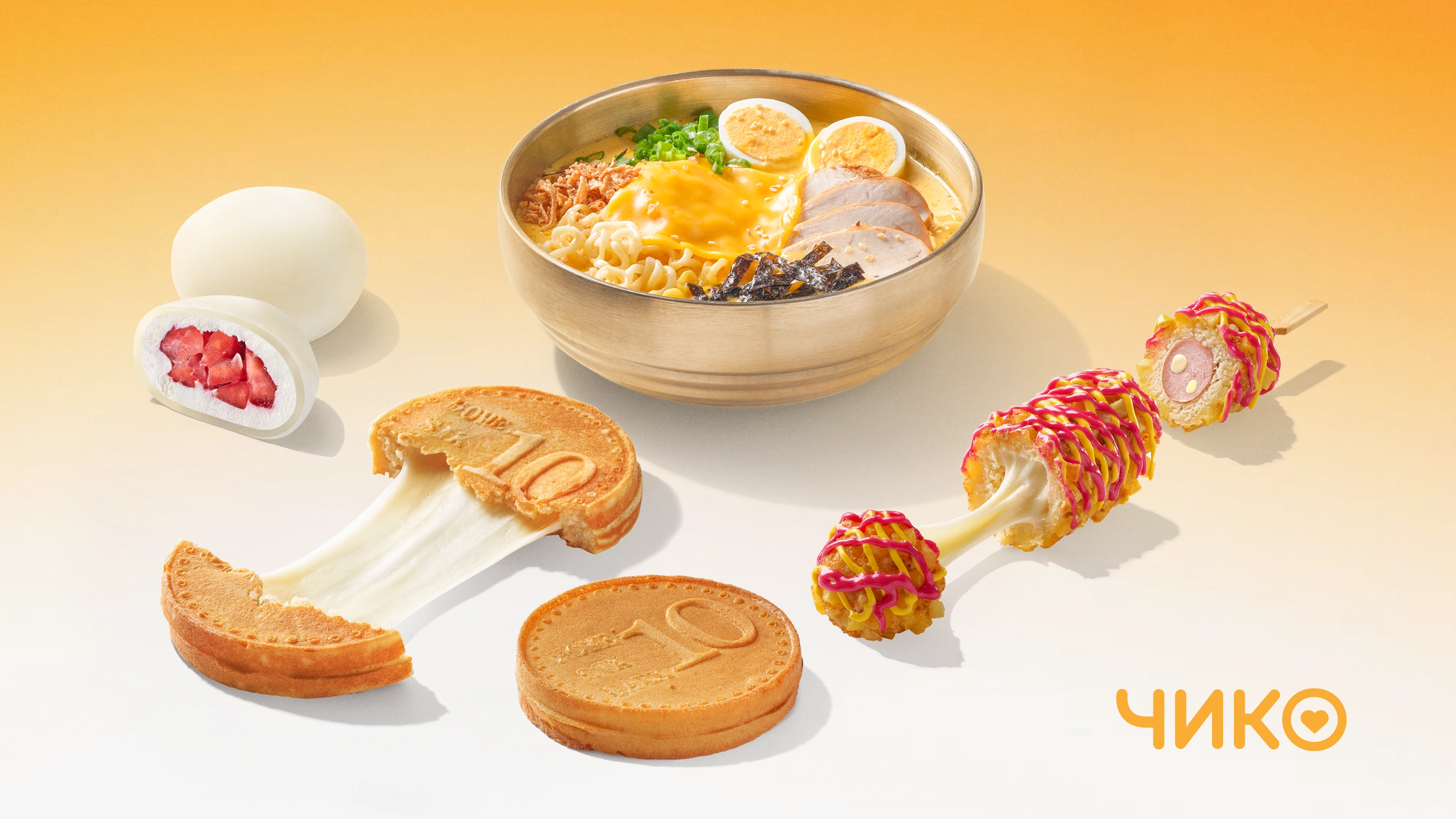
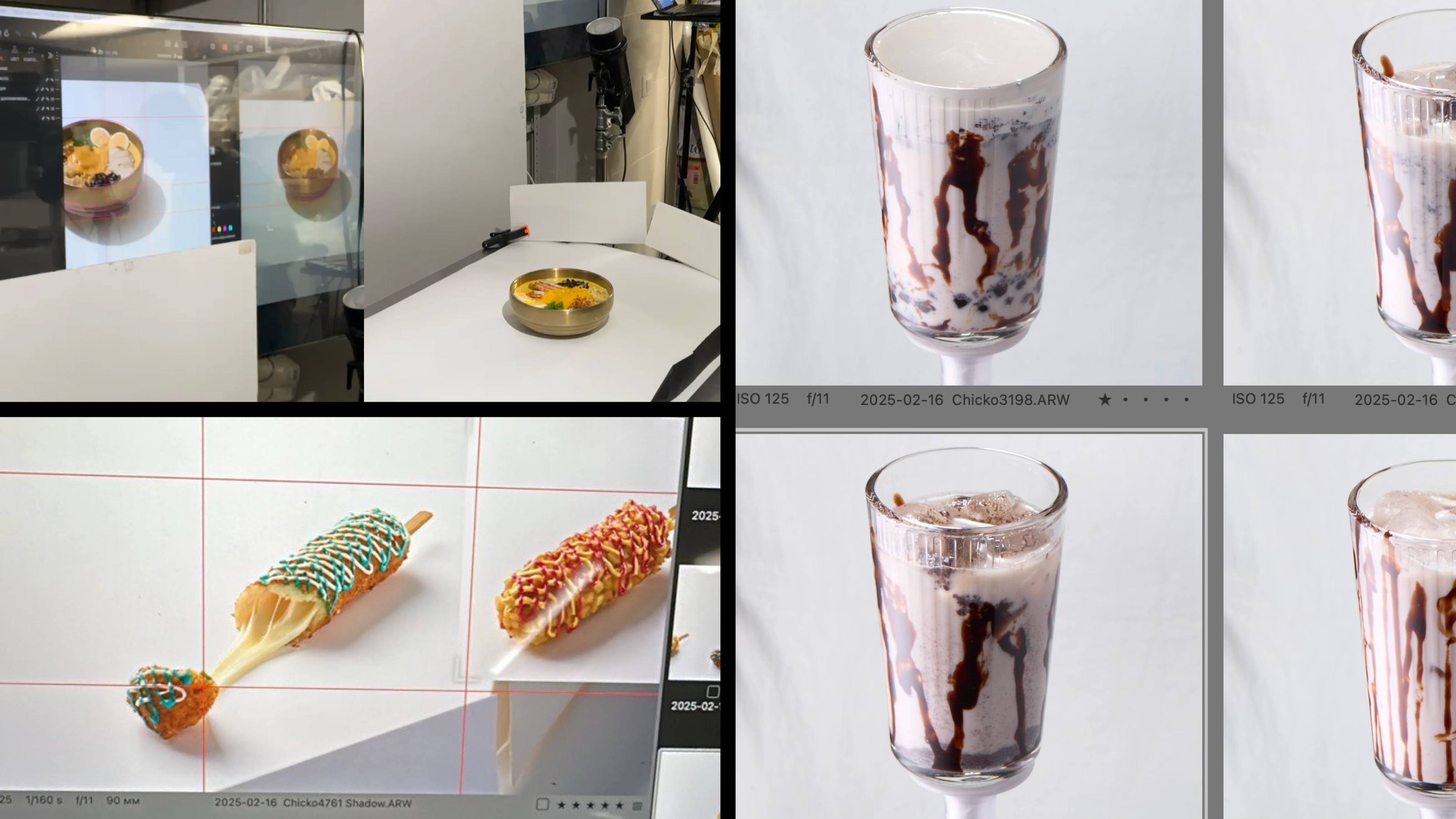
We shot "white on white" — one of the hardest scenarios in food photography. For drinks with glass and ice, we worked out the lighting separately.
The crosswise drizzle shots were captured in layers and assembled from multiple frames in post-production.
Some ingredients were prepared right on set to preserve freshness and texture.
Challenges
The Chicko shoot tested our flexibility and stamina. Many details that are usually prepared in advance had to be worked out right on set: there was no tech spec sheet, plating happened chaotically, and the lighting had to be reset for every new dish.
Some ingredients turned out to be unusable — the tapioca had to be remade, and rare dishes like mochi and corn dogs were only available in a few pieces. The project was scheduled for two days, but the client asked us to finish in one. In the end, the shoot ran without pauses or breaks, in a cramped space and without basic comforts. Despite that, the team stayed focused and saw the process through to the end.
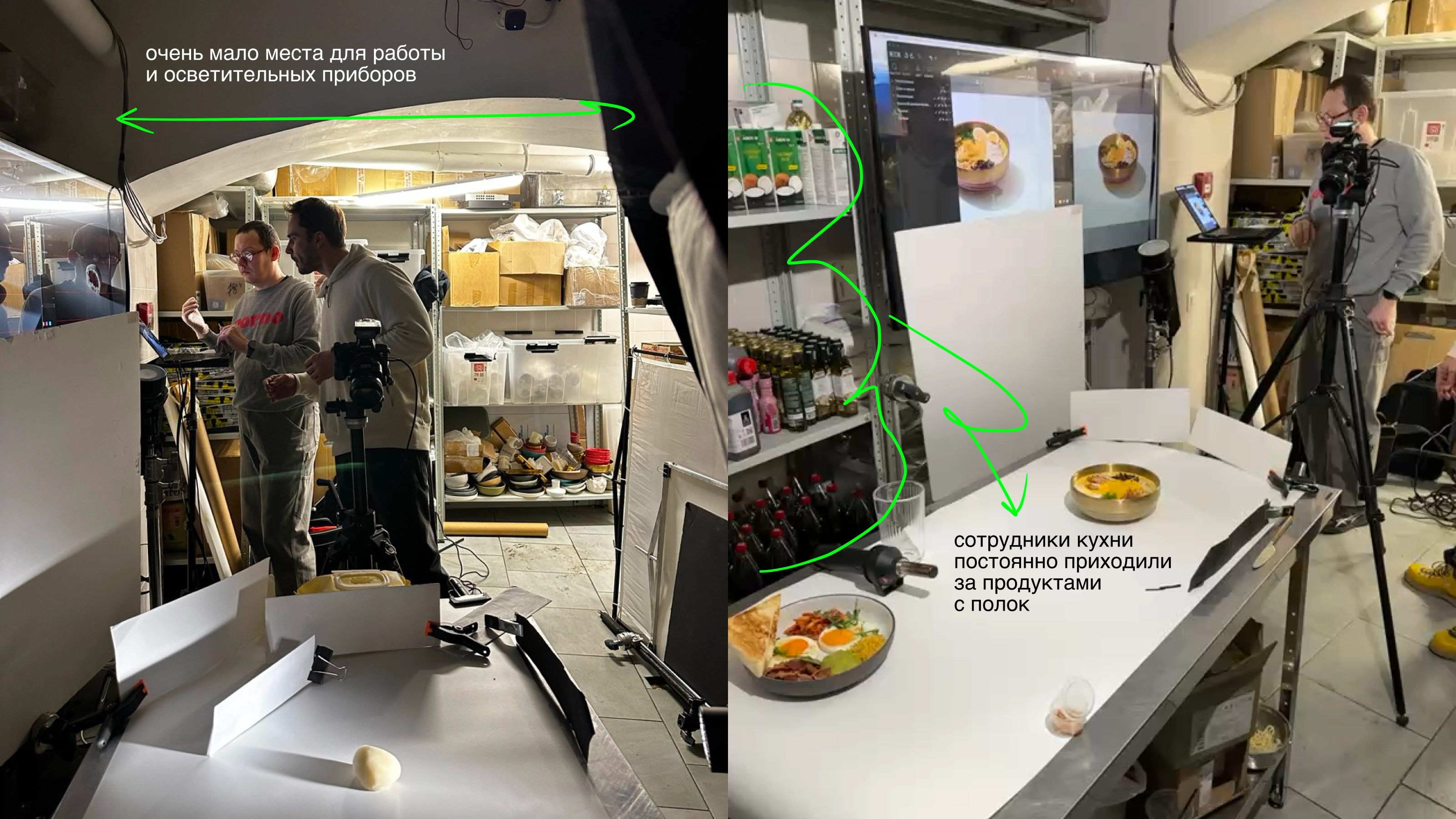
Difficulties always arise when two different worlds collide — the world of a kitchen and fast-food chain, and the world of food photo and video production. When it all happens on the same site, misunderstandings and friction are almost inevitable.
When we worked with Dodo Pizza, the company's head office had its own photo lab, and even there, complex shoots often took several days and multiple attempts. Here, we were on the client's own turf, and we understood right away: they live in a different reality, don't share our professional frame of reference, and aren't obligated to understand the nuances of a photo shoot.
At the first session, we had to resolve issues on the spot, explaining why and how a reshoot would get us to a genuinely high-quality result. And it all paid off: our efforts and the decisions we made together with the client were fully worth it.
We got it all done in a single day, came away with material we're genuinely proud of, and confirmed something important: the result doesn't depend on perfect conditions, but on a team working well together.
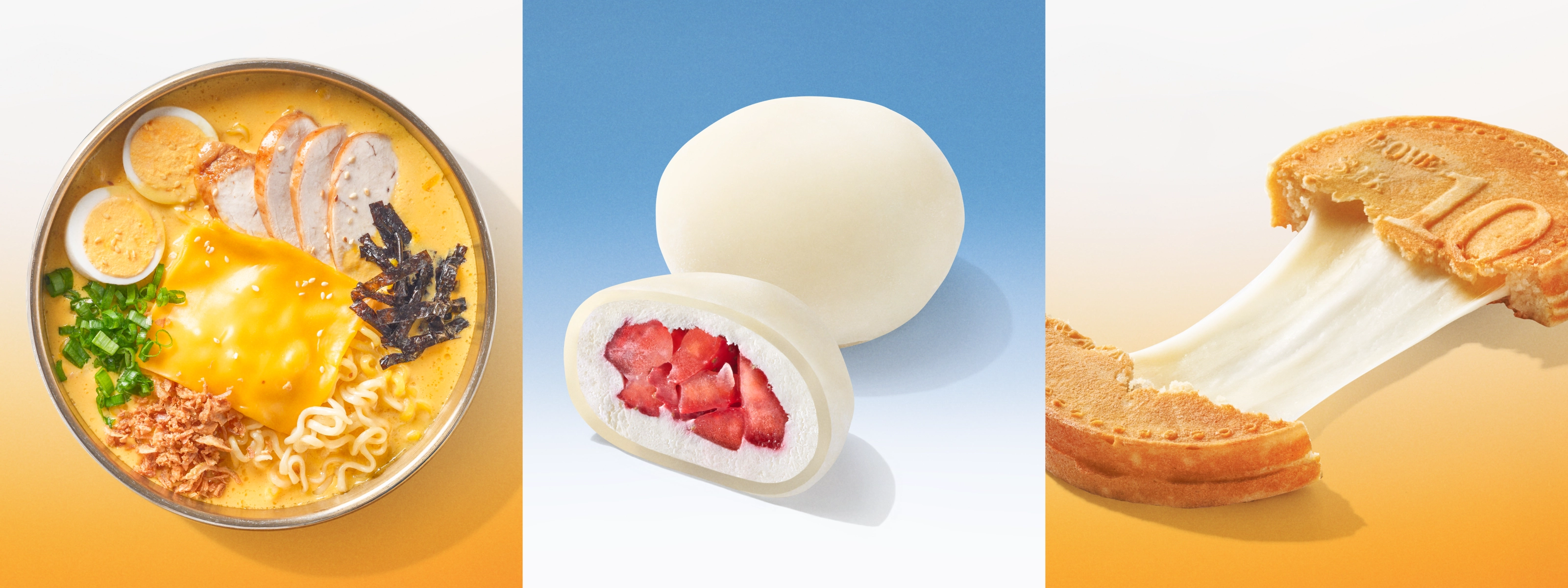
The devil is in the details. Food photography isn't just a technique — it's collaborative work between client and agency. When both sides act as one team, even the hardest shoot day turns into a project worth showing off.
Our principle at Vagabond
We don't look for someone to blame — we look for solutions. What matters to us is getting to the result, no matter how difficult the process is. Chicko is an example of how persistence, attention to detail, and trust within a team turn chaos into visuals that make you hungry just looking at them.
Project team
Project lead — Leonid Danshchikov
Creative direction and concept — Mike Semyonov
Photographer — Daniil Demin
Project manager — Darya Yushketova
Case designer — Mike Semyonov
Case editor — Misha Kurnosov
